RBA and their rejected 9.5% wage offer.
7 July 2026 · Adam Poulton
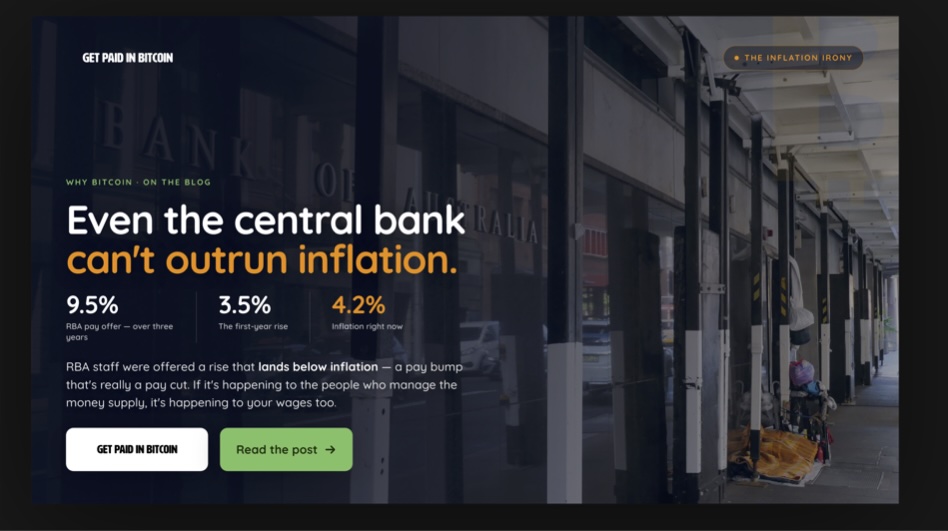
If the people who study inflation every day don't think a 9.5% pay rise over three years is enough… what should the rest of us be measuring?
One of the more interesting stories over the weekend was Reserve Bank staff rejecting a proposed 9.5% wage increase over three years.
Whether you think that's reasonable or not isn't really what caught my attention.
What interested me was who rejected it.
These are people who spend their careers thinking about inflation, interest rates and purchasing power.
It made me wonder: How should everyday Australians measure whether they're actually getting ahead? Most of us default to looking at CPI. It's the figure quoted on the news. It's used in wage negotiations. It's become the number we associate with inflation.
But CPI only measures the change in prices of a selected basket of consumer goods and services.
That's useful.
But if you're trying to understand why houses, shares and many other assets have become so much more expensive over the past few decades, CPI may not tell the whole story.
Personally, I also like to look at Australia's M3 money supply. Not because it's a replacement for CPI, but because it helps answer a different question.
How much has the total supply of money and credit in the economy expanded over time?
If more money is chasing the same number of assets, it shouldn't surprise us that those assets often become more expensive.
That's one of the reasons I've spent so much time in this series talking about purchasing power, rather than simply wages.
Because earning more is only half the equation.
The other half is making sure your savings don't lose ground over time.
For decades Australians have looked to property, shares and superannuation to solve that problem. Increasingly, many are now asking whether Bitcoin deserves a place alongside them.
Not as an "all in" decision. Not as a replacement.
But as another long-term savings tool that can help preserve purchasing power.
As always, my goal isn't to tell people what they should do, it's simply to encourage people to ask better questions.
Because better questions usually lead to better financial decisions.
Q - What do you use as your benchmark? Is CPI enough?
Or do you think we should also be paying attention to measures like money supply and long-term asset prices?
GPIB does not provide financial advice. This post contains general information only and does not take into account your personal circumstances.