Money stress is becoming the default for Australian families. 3/12
19 June 2026 · Adam Poulton
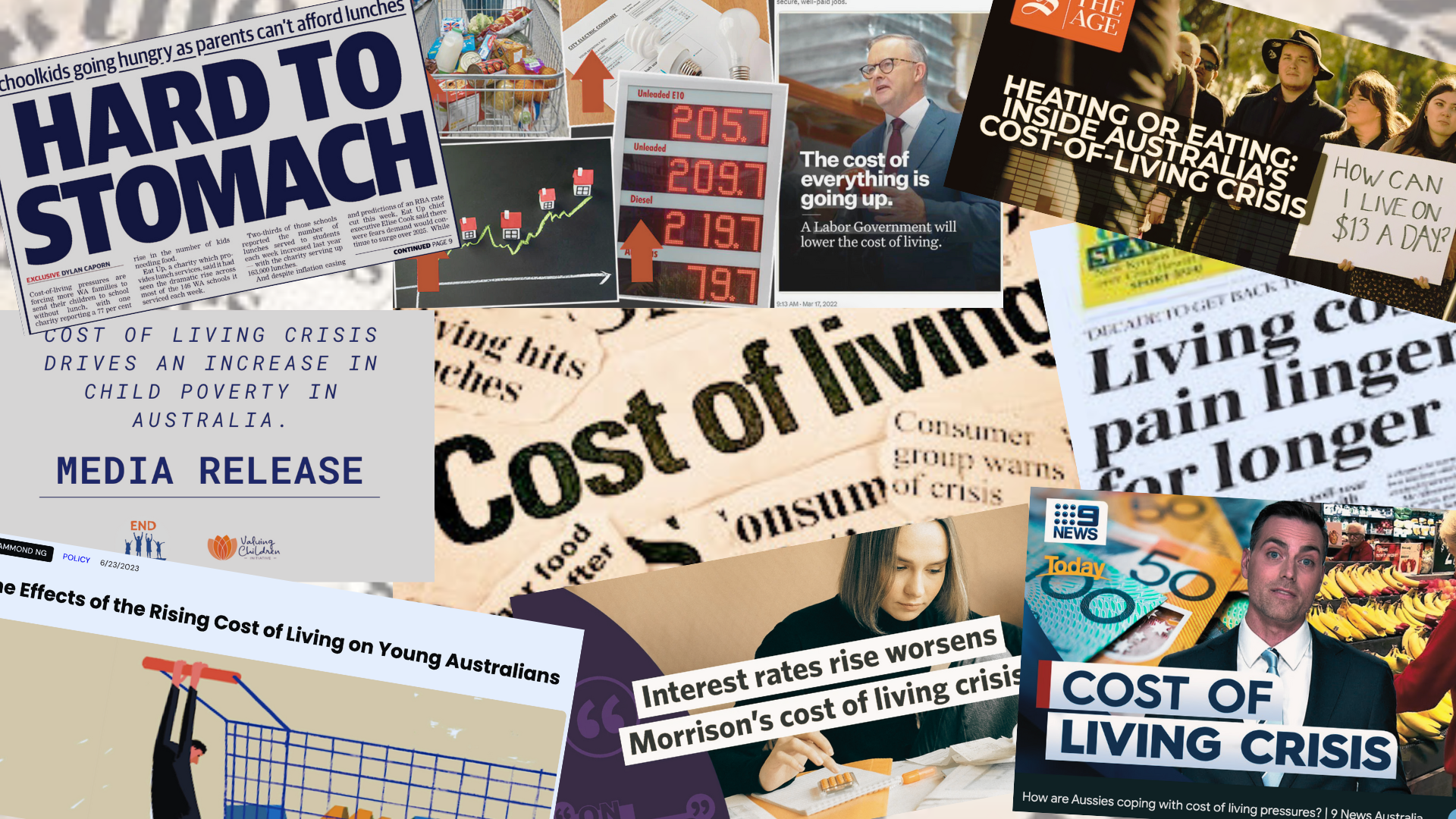
Over the past few years, I’ve had more conversations about money than ever before.
Not investment conversations. Not speculation.
Just ordinary people quietly trying to make sense of why life feels harder than it used to.
People are working harder and longer, earning more than they did five or ten years ago, but feeling like they are slowly sinking.
Housing feels further away, especially for the younger generations and the ‘crisis of hope’ we discussed yesterday. Education costs continue to rise. Everyday expenses creep upward year after year.
For many families, it’s not one dramatic event causing stress — it’s the constant pressure of trying to stay afloat while the waves seem to get bigger.
And importantly, I don’t think this is about personal failure.
A lot of Australians are doing everything “right.” Working hard. Budgeting carefully. Planning responsibly.
But over long periods of time, inflation changes the landscape around us in ways that are easy to miss day-to-day.
Like standing at the wave zone on a calm day, at first the waves lap at your feet, but before you know it the waves grow and stark knocking you around a bit. Then eventually you realise you’re much deeper than where you started.
I don’t say that to alarm anyone.
In fact, I think understanding these long-term shifts calmly is one of the most important things we can do. Because once you recognise the environment clearly, you can start making better long-term decisions within it.
This also isn’t about blaming governments or banks. These are broad structural forces that have developed over decades. But whether we talk about them openly or not, families are feeling the impact in real time, especially younger Australians.
Having two young adolescents, I think a lot about children growing up today and the world they’ll enter in the coming decade.
What will housing cost? What will education cost? What will “financial security” even look like by then?
These aren’t easy questions, but they’re increasingly important ones.
And it’s important to understand the problem before looking into the solution.
For me, the problem has been well laid out. Everybody is talking about the cost of living, or inflation or more recently, the crisis of hope.
SBS have a web site dedicated to it. There is a National Housing Solutions Summit 2026. Federal Government Programs in this years budget. AFR today, “Australia is showing how a rich country gets poorer” https://www.afr.com/policy/economy/australia-is-showing-how-a-rich-country-gets-poorer-20260506-p5zua1
But all of these discussions talk about the problem without offering any meaningful solutions.
In my next post in this series I’m going to share a chart that fundamentally changed how I think about inflation and long-term purchasing power in Australia. We’ll dive into some real numbers so you can understand the scale of the problem and we’ll get into the dry subject of definitions and outline why your should ignore the CPI and look at what real inflation is defined as and looks like.
Not to create fear — but to provide context.
Because context changes how you navigate the future.
Find all posts in this series at https://www.getpaidinbitcoin.com.au/blog